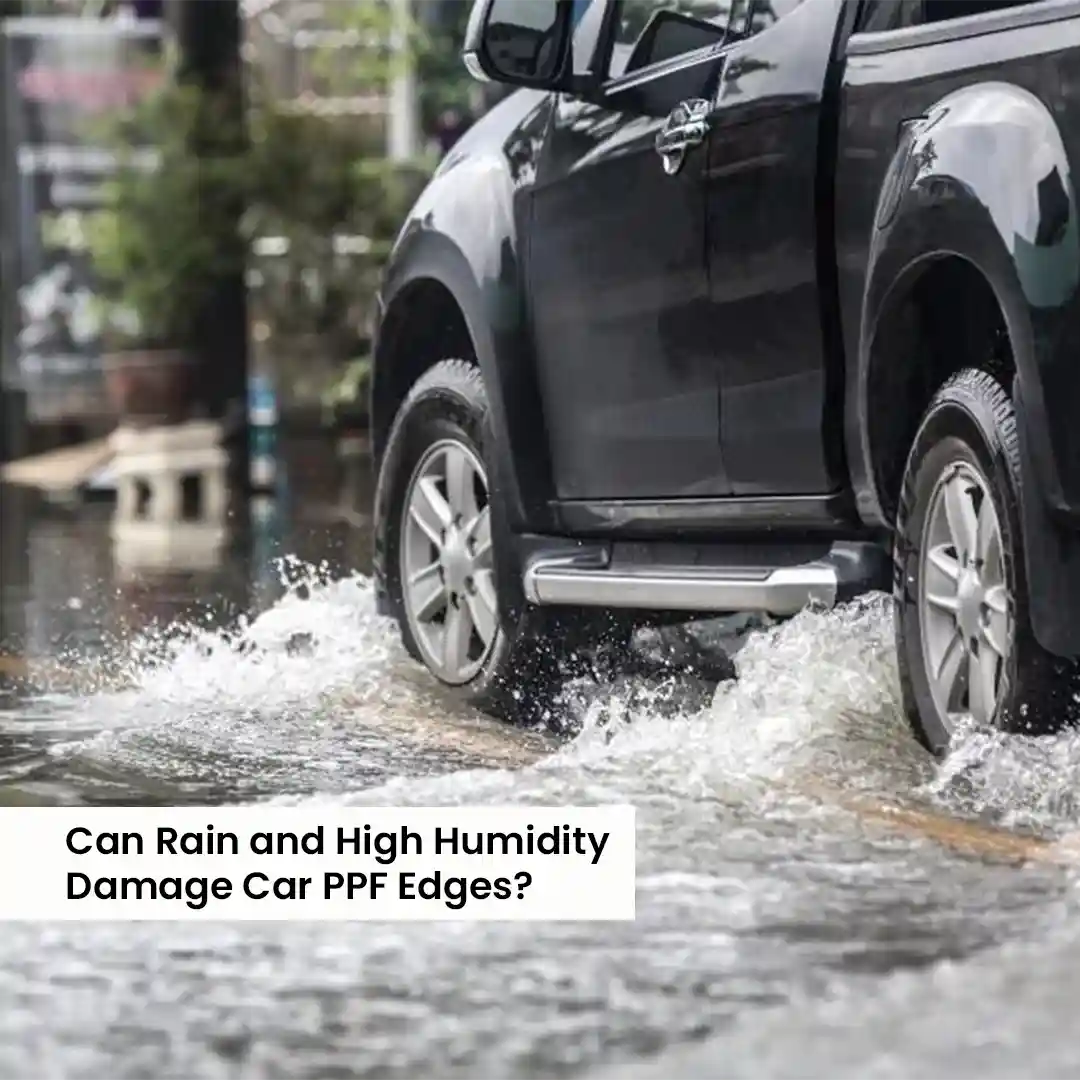
Can Rain and High Humidity Damage Car PPF Edges?
Paint Protection Film (PPF) is designed to protect a car’s paint from stone chips, scratches, stains and everyday road contaminants. However, the film still needs proper care, particularly during the monsoon when vehicles are exposed to rain, moisture, mud and frequent washing.
So, can rain and high humidity cause PPF edges to lift or peel? Rain itself does not normally cause a properly installed PPF to fail. Edge lifting is more often associated with installation quality, exposed edges, contamination, aggressive washing or water being forced underneath the film. We warn that excessive pressure can force water underneath PPF and weaken adhesion, leading to lifting or curling.
Why PPF Edges Need Extra Attention During Monsoon
PPF edges are among the areas most likely to collect dirt and moisture. If an edge has already started lifting, repeated exposure to water, road grime and pressure washing can make the problem worse.
Professional installation plays an important role. Correct preparation, positioning and edge setting help the film maintain proper adhesion. Vehicle-specific patterns and professional installation are also recommended by major PPF manufacturers.
Common Monsoon Risks for PPF
| Risk | What Can Happen |
|---|---|
| Heavy rain | Dirt and contaminants accumulate around exposed edges |
| High-pressure washing | Water can be forced underneath the film |
| Mud and grit | Can collect around lifted edges |
| Bird droppings and insects | May stain the film if left for long |
| Poor installation | Edges may be more prone to lifting |
| Delayed cleaning | Contaminants can become harder to remove |
Does Humidity Make PPF Turn Yellow or Cloudy?
Not normally. Quality modern PPF is designed to resist yellowing and maintain clarity. For example, XPEL describes its PPF as non-yellowing and SunTek offers products with warranties covering issues such as yellowing, depending on the specific product and warranty terms.
Cloudiness or visible moisture should not automatically be attributed to humidity. If you notice persistent haziness, bubbles or changes in appearance, have the film inspected by the installer.
How Often Should You Wash a PPF-Coated Car During Monsoon?
There is no universal weekly schedule. The better rule is to clean the car whenever rain leaves behind mud, dirt, bird droppings or other contaminants.
Hand washing is generally preferred. We recommend hand washing with soap, water and a soft cloth, while others recommend hand washing whenever possible and advise against aggressive washing methods.
After washing, inspect the film edges rather than simply wiping the visible surface.
What If a PPF Edge Starts Peeling?
Do not pull, trim or press the lifted section back yourself. Take the vehicle to the professional installer as soon as possible.
A loose section can collect dirt and moisture underneath it, and aggressive washing can make the lifting worse. We also recommend checking PPF after washing and having lifted or damaged film repaired, removed or replaced.
Early inspection can also help determine whether the issue is limited to a small edge or whether the affected section needs replacement.
Can You Apply Ceramic Coating Over PPF?
Yes, a compatible ceramic coating or PPF-specific sealant can be applied over suitable PPF, provided the product manufacturer permits it. SunTek, for example, confirms that ceramic coatings can be applied over its PPF.
A coating can make the film more hydrophobic and easier to maintain, but it does not fix a poorly bonded or already lifting edge. Edge inspection and correct installation remain more important.
Monsoon PPF Maintenance Checklist
For practical PPF maintenance during monsoon, follow these habits:
- Hand wash whenever possible.
- Avoid directing high-pressure water at film edges.
- Remove mud and road grime promptly.
- Clean bird droppings and insects without aggressive scrubbing.
- Dry the vehicle after washing.
- Check edges regularly for lifting or curling.
- Avoid abrasive cleaners and harsh chemicals.
- Have any lifting inspected by a professional installer.
If you are looking for Paint Protection Film in Bangalore, choosing an experienced installer is particularly important. A good installation and aftercare process can matter as much as the film itself.
For car owners comparing a Best car detailing studio in Bangalore, ask about the PPF brand, installation method, warranty, edge coverage and aftercare recommendations before choosing a package. Carsbuddy can also be considered when evaluating professional car detailing and paint protection services.
FAQs
1. Can rain and high humidity cause PPF edges to lift or peel?
Rain and humidity alone should not normally cause properly installed PPF to peel. However, existing edge lifting can worsen when water, dirt and pressure washing get underneath the film. Installation quality, edge preparation and washing technique are important factors. High-pressure water directed at the edge can weaken adhesion and cause lifting or curling.
2. Does humidity cause PPF to turn yellow or cloud up?
Quality PPF is designed to resist yellowing and maintain optical clarity. Persistent cloudiness, bubbling or discoloration should therefore be inspected rather than automatically blamed on humidity. The film's quality, age, exposure, installation and maintenance can all influence its appearance. Warranty coverage also varies between PPF products and manufacturers.
3. What should I do if I notice the PPF edge starting to peel during the monsoon?
Have the vehicle inspected by the original installer or another qualified PPF professional as soon as possible. Avoid pulling, trimming or repeatedly pressing the loose section yourself. Do not direct a pressure washer at the affected area. Early inspection can prevent dirt and moisture from accumulating underneath and determine whether the edge can be repaired or the section needs replacement.
4. How often should I wash my PPF-coated car during the rainy season?
Wash it whenever rain leaves significant mud, dirt, bird droppings or other contaminants on the surface. There is no fixed monsoon frequency that suits every vehicle. Hand washing with suitable soap and a soft cloth is generally preferred. After washing, dry the car and check the PPF edges for lifting, curling or trapped debris.
5. Can I apply ceramic coating or sealant over PPF during the monsoon?
Yes, provided the coating or sealant is compatible with the specific PPF. Ceramic coatings can add hydrophobic properties and make cleaning easier, but they do not repair lifted edges or replace proper PPF maintenance. SunTek confirms that ceramic coatings can be applied over its PPF, while some products already incorporate hydrophobic topcoat technology.