
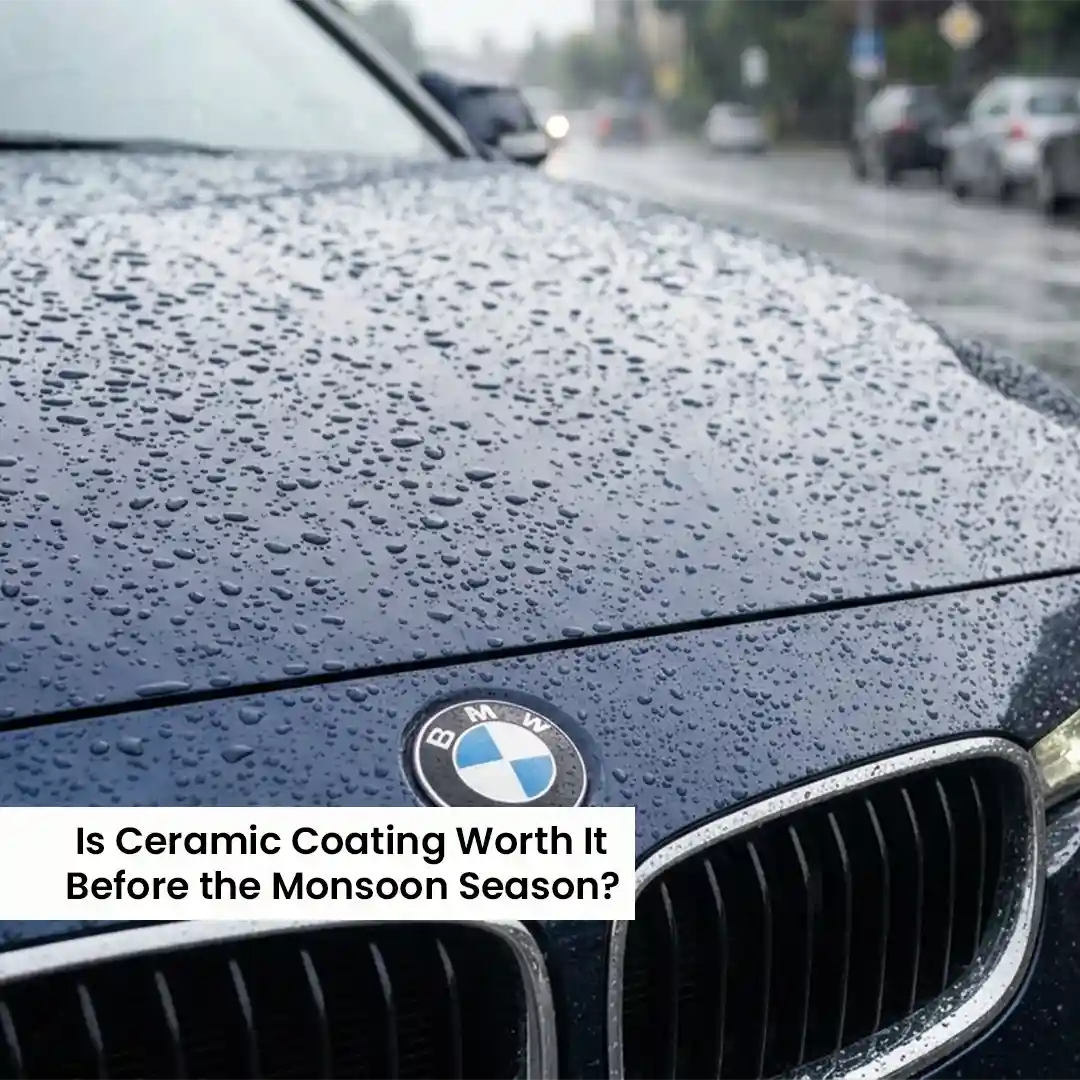
Is Ceramic Coating Worth It Before the Monsoon Season?
Yes, ceramic coating can be worthwhile before the monsoon, particularly for cars regularly exposed to rain, road grime, bird droppings, tree sap and water spots. A quality coating creates a hydrophobic surface that makes water and contaminants easier to remove while adding resistance to environmental and chemical damage.
However, ceramic coating is not a substitute for regular washing, and it does not make car paint scratch-proof or completely prevent water spots.
Why Apply Ceramic Coating Before the Monsoon?
Monsoon driving exposes your car to more than just rain. Mud, dust, insects, road contaminants and dirty standing water can remain on the paint after a drive.
A ceramic coating chemically bonds to the paint and creates a durable protective layer. Its hydrophobic properties encourage water to bead and roll away, while the coating can make routine cleaning easier.
For car owners considering ceramic coating in Kochi, where heavy seasonal rainfall and humidity are important considerations, professional preparation and application are particularly important.
What Ceramic Coating Can and Cannot Do
| Ceramic coating can help with | Ceramic coating cannot guarantee |
|---|---|
| Water repellency | Complete scratch protection |
| Easier removal of road grime | Protection from stone chips |
| Resistance to environmental contaminants | Elimination of water spots |
| UV and chemical protection | Zero maintenance |
| Gloss and surface slickness | Permanent protection |
The coating should therefore be viewed as a paint protection and maintenance aid, rather than an invisible shield against every form of damage.
How Does It Help During Heavy Rain?
The hydrophobic surface changes how water interacts with the paint. Instead of spreading across the surface, water tends to form droplets and run off more readily. This can reduce the amount of water and loose dirt that remains on the vehicle.
However, rainwater can still contain contaminants, and water that dries on a car can leave mineral deposits. Ceramic Pro’s aftercare guidance specifically recommends drying the vehicle completely rather than allowing it to air-dry because minerals in water can contribute to water spotting.
Should You Get Paint Correction First?
Yes, if the paint has visible swirls, oxidation, scratches or other imperfections.
Ceramic coating does not hide paint defects permanently. In fact, it can preserve the condition of the surface underneath it.
For a new car with clean, well-maintained paint, extensive correction may not be necessary. The appropriate preparation should depend on the actual condition of the paint.
What About Washing After Monsoon Drives?
A ceramic-coated car should still be washed regularly. If the vehicle comes home covered in mud and road grime, leaving the contamination on the surface for an extended period is not good practice.
Use a suitable car shampoo, gentle wash mitt and clean microfiber towels. Avoid aggressive scrubbing. Ceramic Pro recommends rinsing debris first, using appropriate washing methods and drying the vehicle completely.
The exact maintenance interval depends on how often you drive, local conditions and the coating used.
Is Ceramic Coating Worth It Before the Monsoon?
For owners who want easier maintenance and additional protection against environmental contamination, yes. The greatest benefit is not that the car becomes maintenance-free. It is that routine cleaning can become easier and the paint gains an additional protective layer.
If you are looking for the Best car detailing studio in Kochi, compare the preparation process, coating brand, curing procedure, warranty and aftercare support rather than choosing a studio based only on price.
Carsbuddy can also be considered when researching professional car detailing and ceramic coating services.
FAQs
1. Is it beneficial to apply a ceramic coating right before the monsoon season?
Yes, provided the coating is professionally prepared and applied with enough time for proper curing. A ceramic coating can improve water repellency, make contaminants easier to clean and provide resistance against environmental and chemical exposure. The important consideration is timing: the vehicle must remain protected from water for the manufacturer's specified curing period after application.
2. How does ceramic coating protect car paint during heavy rains?
Ceramic coating creates a hydrophobic surface that encourages water to bead and move off the paint. It also provides a chemically resistant layer that can help protect against environmental contaminants. However, rainwater can still leave mineral deposits when it dries. Washing and properly drying the vehicle remain important, particularly during periods of heavy rainfall.
3. Will rainwater stain or damage a car with ceramic coating?
Ceramic coating reduces the likelihood of certain contaminants bonding strongly to the paint, but it does not make the surface immune to water spots. Rainwater can contain minerals and contaminants that remain after evaporation. If water spots develop, they should be addressed using coating-safe methods rather than aggressive polishing or abrasive products.
4. Can I wash my ceramic-coated car immediately after driving through monsoon mud and grime?
If the coating has fully cured, washing the car after a muddy drive is advisable rather than allowing contaminants to remain on the surface. However, a newly applied coating needs a specific curing period before washing. Ceramic Pro recommends waiting around two weeks for its coatings, while other products may have different requirements. Always follow the coating manufacturer's instructions.
5. Should I get paint correction done before applying ceramic coating for the monsoon?
Paint correction is advisable when the vehicle has noticeable swirl marks, oxidation or other paint defects. A ceramic coating does not replace paint correction, and applying it over an imperfect surface can preserve those imperfections underneath the coating. If the paint is already in excellent condition, extensive correction may not be necessary.